Is web dev still worth it in 2026?
What Services Do Web Developers Offer?
Most business owners find out what a web developer actually does the hard way — usually after paying for a “custom website” that turns out to be a template with their logo dropped on top. I’ve seen it happen to smart, experienced executives who simply didn’t know which questions to ask before signing a contract.
That gap in knowledge costs real money. A CMO budgets for a marketing site and ends up needing a database integration nobody scoped. A CTO inherits a “finished” web app that has no documentation and no test coverage. These aren’t edge cases — they’re what happens when businesses hire without understanding the full scope of web development services.
This guide breaks down exactly what web developers do, what separates a real development service from a website-building shortcut, and how to evaluate a custom web development company in Ahmedabad or a custom web development company in India without getting lost in technical jargon you shouldn’t need a computer science degree to understand.
What Is Web Development?
Web development is the work of building and maintaining websites and web applications — everything from the visual layout a visitor sees to the server logic and databases running behind the scenes. It splits into three broad areas: frontend (what users see and interact with), backend (the server, database, and application logic), and full-stack (developers who handle both).
It’s easy to confuse web development with web design, but they’re not the same discipline. Design is about how something looks and feels. Development is about how it actually works — whether a checkout page processes payments correctly, whether a form submission reaches the right database, or whether the site loads fast enough that visitors don’t leave before it renders. A beautiful design with poor development behind it is still a broken product.
What Services Do Web Developers Provide?
This is where scope gets misunderstood most often. A web developer’s job isn’t limited to writing code for a homepage. Depending on the engagement, services typically include:
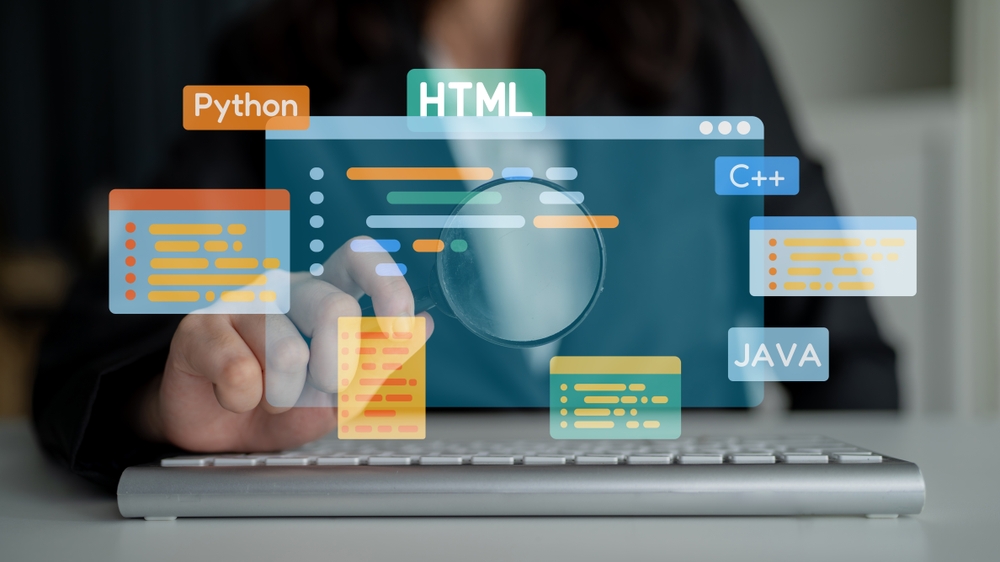
- Frontend development — building the interface users interact with, using HTML, CSS, JavaScript, and frameworks like React or Vue
- Backend development — server-side logic, databases, and APIs that power the site’s functionality
- E-commerce development — shopping carts, payment gateway integration, inventory syncing
- Web application development — custom tools like client portals, booking systems, or internal dashboards
- API integrations — connecting a website to CRMs, payment processors, or third-party services
- Performance optimization — making sure pages load quickly across devices and connections
- Security implementation — SSL, data encryption, protection against common vulnerabilities
- Ongoing maintenance — updates, bug fixes, and monitoring after launch
The mistake most businesses make is assuming they only need one of these. A functional e-commerce store, for instance, almost always needs backend development, payment integration, and security working together — not just a shopfront design.
What Is a Web Development Service?
A web development service is a structured engagement where a developer or agency handles the technical build of your website or application, typically following a defined process rather than an ad hoc arrangement. A properly run service includes:
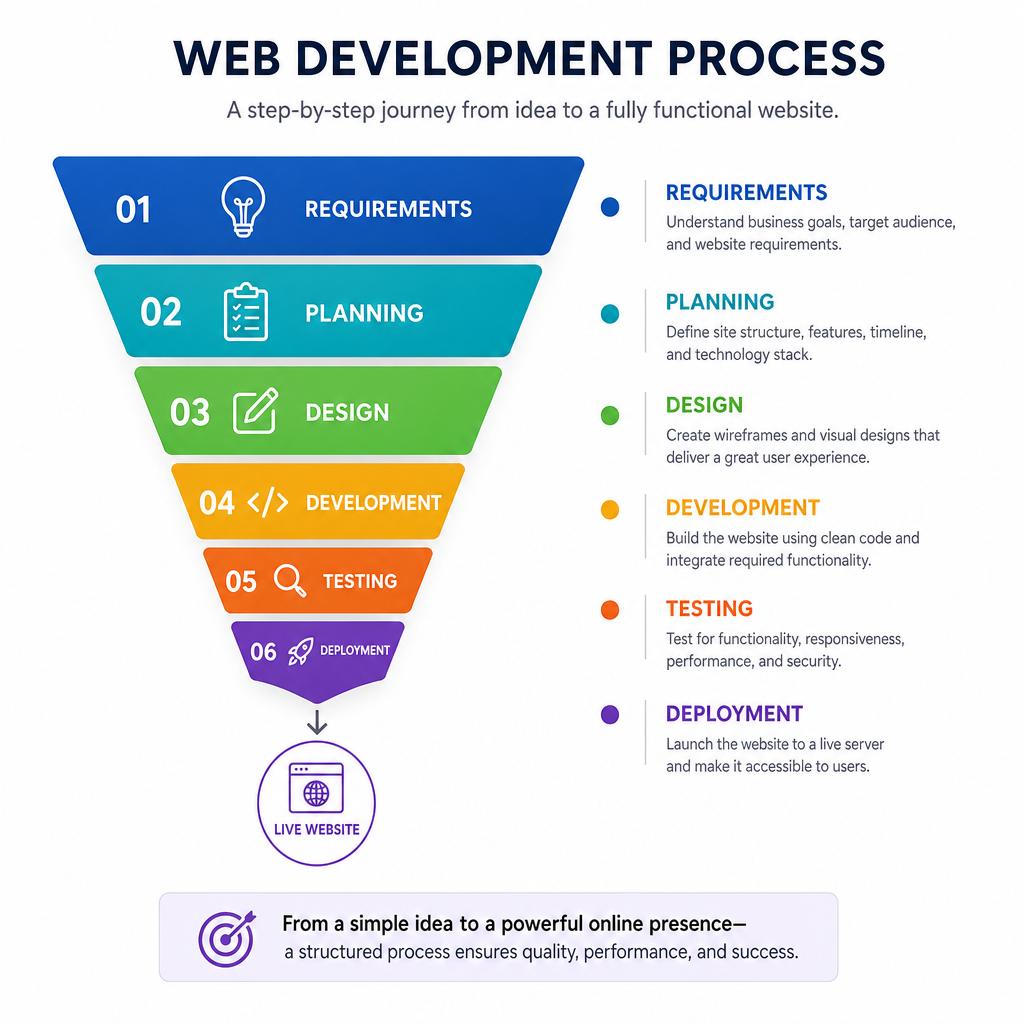
If a provider skips straight from a quick call to a price quote without any discovery step, that’s usually a sign you’re getting a template, not a genuine development service. Real scoping takes time because real requirements are rarely simple.
What Are the Top 3 Website Builders?
Not every business needs custom development from day one. For simpler needs — a small business site, a portfolio, an early-stage landing page — website builders can be a reasonable starting point. The three most established options are:
| Builder | Best For | Key Trade-Off |
|---|---|---|
| WordPress | Content-heavy sites, blogs, businesses wanting long-term flexibility | Requires more setup and plugin management than closed-platform builders |
| Shopify | E-commerce businesses needing a fast, reliable storefront | Less flexible for complex, non-retail functionality |
| Squarespace | Design-focused small businesses and portfolios | Limited customization for advanced functionality |
The honest caveat: website builders work well until your business outgrows them. Once you need custom workflows, complex integrations, or performance at scale, most companies eventually migrate to custom development. Knowing that upfront saves you from rebuilding twice.
Why Is Web Development Important for Businesses?
Your website is frequently the first, and sometimes only, interaction a potential customer has with your business before deciding whether to trust you. Poor development undermines that trust in ways that are easy to miss internally but obvious to visitors — slow load times, broken forms, checkout errors, or a site that looks fine on desktop but falls apart on mobile.
Beyond first impressions, solid development directly affects revenue. E-commerce businesses lose sales to slow checkout flows. Service businesses lose leads to broken contact forms. B2B companies lose credibility when a site looks outdated next to competitors. Development isn’t a cost center — it’s infrastructure that either supports growth or quietly undermines it.
Frequently Asked Questions
1. What is the difference between web design and web development?
Web design focuses on the visual layout and user experience. Web development is the technical build that makes the site function — forms, databases, integrations, and backend logic.
2. How much does web development cost?
Costs vary widely based on complexity. A simple business website costs far less than a custom web application with integrations, databases, and ongoing maintenance. Get a scoped quote after a discovery conversation rather than relying on a flat estimate.
3. Do I need a custom website, or is a website builder enough?
Website builders work well for simple sites with standard functionality. Custom development becomes necessary once you need specific workflows, complex integrations, or performance that off-the-shelf platforms can’t support.
4. How long does it take to build a website?
A basic site can launch in a few weeks. A custom web application with backend logic and integrations often takes several months, depending on scope.
5. What should I ask a web development company before hiring them?
Ask about their discovery process, request examples of similar projects, confirm whether post-launch support is included, and clarify who specifically will work on your project.
Final Thoughts
Web development isn’t a single service — it’s a collection of disciplines that need to work together to produce a site that actually performs for your business, not just one that looks acceptable in a screenshot. Understanding the difference between design and development, and knowing what a full-service engagement actually includes, puts you in a much stronger position before you sign with any provider.
If you’re evaluating options, a custom web development company in Ahmedabad or a custom web development company in India can offer the technical depth of a full-service team, often with more direct communication and faster turnaround than larger international agencies. Whatever route you choose, ask the harder questions upfront — the businesses that skip discovery are usually the ones rebuilding their site again in eighteen months.