March 2026

How To Best Hire Java Developers in India For Your Company

How To Best Hire Java Developers in India For Your Company

Looking to hire top Java developers in India? Discover expert tips, proven strategies, and key insights to help your company find, evaluate, and hire dedicated Java engineers efficiently. Learn how to choose the right talent, reduce costs, and scale your development team with skilled Java programmers in India.

How To Best Hire Java Developers in India For Your Company Read More »

Hire java Developers
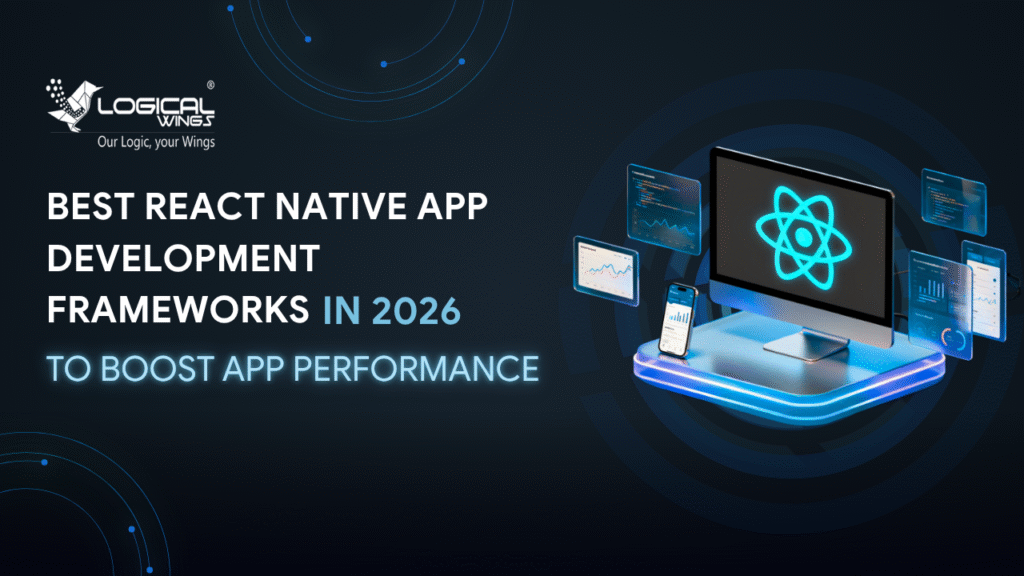
Best React Native App Development Frameworks in 2026 to Boost App Performance

Best React Native App  Development Frameworks in 2026 to Boost App Performance

The mobile app market has never been more competitive. With over 7.5 billion smartphone users worldwide and app store revenues projected to surpass $750 billion by 2026, the pressure on development teams to ship fast, perform flawlessly, and scale reliably is immense. In this environment, choosing the right framework for React Native app development is not a technical footnote — it is a strategic business decision. React Native continues to dominate the cross-platform mobile apps landscape, powering apps at companies like Meta, Shopify, Microsoft, and Tesla. But React Native is not a monolith. An expanding ecosystem of complementary frameworks, toolkits, and boilerplates has emerged around it — each offering distinct performance characteristics, developer ergonomics, and cost profiles.This guide cuts through the noise. We evaluate the top frameworks for 2026, compare their real-world performance impact, and help you understand when to invest in experienced talent — including why so many global companies choose to Hire dedicated React JS developers from India to maximise output without inflating budgets. Native app Development Framework in 2026 Framework Comparison at a Glance Before diving deep, here’s a snapshot of the frameworks covered in this guide: Framework Dev Experience Best For Performance React Native CLI ⭐⭐⭐⭐☆ Full-scale enterprise apps High Expo ⭐⭐⭐⭐⭐ Rapid MVP / startups High NativeScript ⭐⭐⭐⭐☆ Complex native integrations Very High Flutter (benchmark) ⭐⭐⭐⭐⭐ Pixel-perfect UI / gaming Excellent React Native Web ⭐⭐⭐☆☆ Unified web + mobile Moderate Ignite Boilerplate ⭐⭐⭐⭐☆ Fast production bootstrapping High 1. React Native CLI — The Gold Standard for Enterprise Apps When developers talk about React Native app development, they usually start here. The React Native CLI (Command Line Interface) is the official, bare-metal approach to building cross-platform mobile applications using JavaScript and React. Performance Profile The 2024 introduction of the New Architecture — featuring the JSI (JavaScript Interface), Fabric renderer, and TurboModules — was a watershed moment. These changes eliminate the old bridge bottleneck that had long been React Native’s Achilles’ heel. In 2026, apps built on the New Architecture routinely achieve: •        60+ FPS smooth animations on mid-range Android devices •        Sub-200ms startup times on flagship phones •        Near-native memory management through direct C++ bindings •        Concurrent rendering support via React 18 integration When to Use React Native CLI •        Enterprise applications with complex native module requirements •        Apps needing deep OS-level integrations (Bluetooth, NFC, background processing) •        Teams that need full control over the build pipeline and native code •        Long-term products where architectural flexibility matters The CLI’s power comes with a learning curve. To truly unlock its performance ceiling, you need developers who understand both the JavaScript layer and native iOS/Android ecosystems. This is precisely why forward-thinking companies hire dedicated React JS developers with proven CLI experience rather than relying on generalist contractors. 2. Expo — Developer Velocity Meets Production Readiness Expo has undergone a remarkable transformation. Once dismissed as a “training wheels” framework, Expo SDK 52 (2025) and the subsequent 2026 releases have made it a legitimate choice for production applications of serious scale. With the introduction of Expo Router v4, file-based routing that rivals Next.js’s developer experience is now available for mobile. Performance Profile •        EAS (Expo Application Services) Build delivers cloud-managed native builds with zero local toolchain setup •        Expo Router v4 enables server-side rendering for React Native Web, dramatically improving first-load performance •        Automatic code splitting reduces initial bundle sizes by 30–45% compared to monolithic bundles •        Hermes engine is enabled by default, cutting app startup time by up to 40% The Startup & MVP Argument For startups needing to validate ideas quickly, Expo’s managed workflow lets a small team ship a fully featured, App Store–ready product in weeks rather than months. If you hire React JS developers with strong Expo experience, your team can go from concept to TestFlight in a single sprint cycle. The productivity gains alone can justify the framework choice. 💡  Pro Tip: Expo + Bare Workflow• Don’t treat Expo as a binary choice. The ‘bare workflow’ lets you eject from managed Expo while keeping EAS Build and Expo modules.• This gives you the native code access of React Native CLI with the tooling convenience of Expo — a best-of-both-worlds configuration popular with scaling startups. 3. NativeScript — When True Native Performance Is Non-Negotiable While React Native uses a JavaScript bridge (or JSI) to communicate with native APIs, NativeScript takes a different philosophy: JavaScript runs directly on the main thread, with direct access to 100% of Native iOS and Android APIs without any abstraction layer. This makes NativeScript uniquely powerful for performance-critical applications. Performance Profile •        Direct native API access without bridge overhead — zero marshalling cost for native calls •        Supports Vue.js, Angular, and Svelte in addition to React — broadening team flexibility •        Memory footprint 15–25% lower than equivalent React Native CLI apps in benchmark tests •        Ideal for apps with intensive native interactions: AR/VR, real-time sensor data, IoT dashboards The Trade-off NativeScript’s power comes at a cost: the talent pool is smaller than React Native’s. Finding developers with deep NativeScript expertise can be challenging — and expensive — in Western markets. This is one of the strongest arguments for choosing to Hire React JS developers in India, where a larger proportion of full-stack mobile engineers have exposure to NativeScript alongside React Native. 4. Flutter — Understanding the Competition (And What It Means for Your Stack) No framework comparison in 2026 is complete without addressing Flutter. Google’s UI toolkit has matured significantly and now powers apps at BMW, eBay Motors, and Alibaba. Understanding Flutter’s strengths helps you make a more informed case for or alongside React Native. Where Flutter Wins •        Pixel-perfect UI consistency across Android, iOS, web, and desktop from a single

Best React Native App  Development Frameworks in 2026 to Boost App Performance Read More »

React native app development
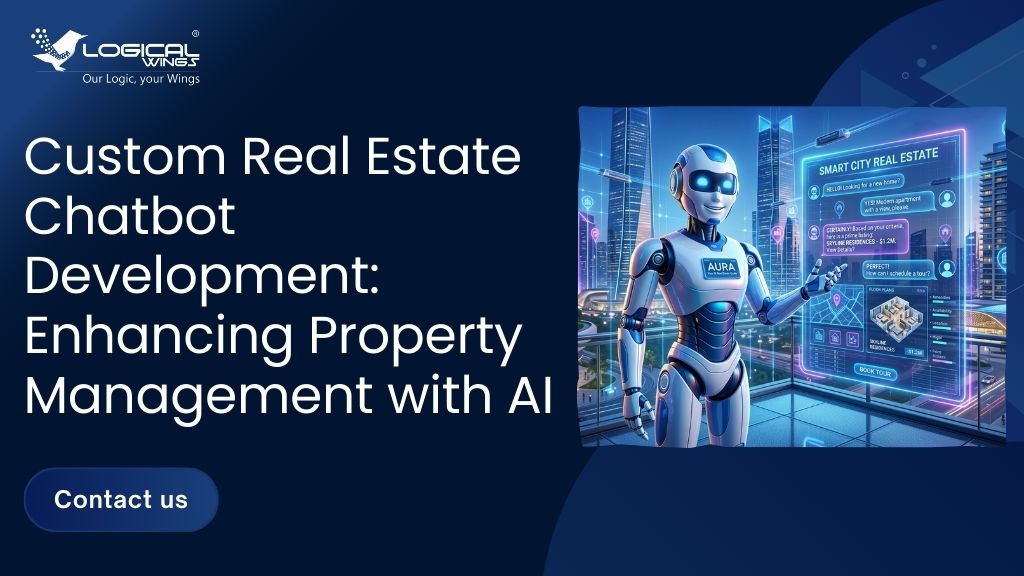
Custom Real Estate Chatbot Development: Enhancing Property Management with AI

Custom Real Estate Chatbot Development: Enhancing Property Management with AI

The real estate industry is experiencing a seismic transformation driven by artificial intelligence, and at the forefront of this revolution are AI-powered chatbots and intelligent agents. In 2026, real estate professionals who leverage custom chatbot development are capturing 40% more leads, converting prospects at rates 5X higher than traditional methods, and delivering 24/7 customer experiences that were impossible just three years ago. According to recent market analysis, the AI real estate market has expanded from $222.7 billion in 2024 to $303.1 billion in 2025, reflecting a robust 36.1% compound annual growth rate. This explosive growth is driven by a fundamental shift in consumer behavior: 82% of Americans now use AI platforms like ChatGPT and Gemini for housing market insights, while 93% of homebuyers conduct their initial research online. For real estate businesses, this presents both an unprecedented opportunity and an urgent competitive imperative. Properties don’t sell themselves anymore — they’re discovered, evaluated, and shortlisted by AI-assisted buyers who expect instant responses, personalized recommendations, and seamless digital experiences. Real estate chatbots and AI agents have evolved from experimental novelties to mission-critical business infrastructure that directly impacts revenue, lead quality, and operational efficiency. What Is a Real Estate AI Agent? Understanding the Technology A real estate AI agent is an intelligent software system powered by artificial intelligence and natural language processing that can autonomously interact with property buyers, sellers, renters, and investors through conversational interfaces. Unlike traditional chatbots that follow rigid, pre-programmed decision trees, modern real estate AI agents leverage advanced machine learning models — including GPT-4, Claude, Gemini, and specialized industry-trained models — to understand context, interpret complex queries, and deliver personalized, human-like responses. Core Components of a Real Estate AI Agent Modern real estate chatbots are sophisticated systems comprised of multiple integrated technologies: • Natural Language Processing (NLP) engines that understand real estate terminology, local market nuances, and buyer intent across multiple languages • Machine Learning models trained on millions of real estate conversations to predict user needs and optimize response accuracy • Integration APIs connecting to MLS databases, CRM systems, property management platforms, scheduling calendars, and mortgage calculators • Conversational AI frameworks that maintain context across multi-turn dialogues and remember user preferences from previous interactions • Real-time data synchronization ensuring property availability, pricing, and listing details are always current • Multi-channel deployment capabilities enabling the same AI agent to operate across websites, mobile apps, WhatsApp, Facebook Messenger, SMS, and voice platforms. The Evolution: From Simple Chatbots to Intelligent Agents The distinction between basic chatbots and true AI agents is critical. First-generation real estate chatbots (2018-2021) could answer FAQs and collect contact information but required constant manual updates and couldn’t handle complex queries. Second-generation systems (2022-2024) introduced machine learning and limited personalization but struggled with conversational depth. Today’s third-generation real estate AI agents (2025-2026) represent a quantum leap in capability. They can conduct entire property consultations autonomously, qualify leads based on sophisticated financial and lifestyle criteria, provide neighborhood insights and market analysis, schedule property viewings by integrating with agent calendars, walk buyers through mortgage pre-qualification, remember client preferences across months of interaction, and even negotiate offers within pre-defined parameters. How AI Agents Benefit Real Estate Industries: Quantified Impact The business case for custom real estate chatbot development is no longer theoretical — it’s backed by extensive industry data demonstrating measurable ROI across multiple performance dimensions. Here’s how real estate AI agents deliver tangible value: 1. Dramatic Lead Generation and Conversion Improvements AI-powered chatbots enhance lead generation in real estate by 33% according to industry research. This improvement stems from several factors: instant engagement the moment a prospect lands on your website (before they bounce to a competitor), intelligent lead qualification that identifies high-intent buyers based on budget, timeline, and property preferences, and 24/7 availability ensuring no lead is lost due to timezone differences or after-hours inquiries. More importantly, real estate teams using AI chatbots see conversion rates increase by up to 40%. AI agents nurture leads through personalized follow-ups, automatically schedule property viewings when buyer interest peaks, provide instant answers to objections and concerns, and seamlessly hand off qualified prospects to human agents at the optimal moment. 2. Operational Cost Reduction Through Automation Chatbots in real estate can handle up to 80% of routine customer inquiries in top-tier firms, dramatically reducing the administrative burden on sales teams. This automation translates directly to cost savings: elimination of 24/7 customer service staffing requirements, reduction in time spent answering repetitive questions about properties, neighborhoods, and processes, and automated appointment scheduling eliminating phone tag and calendar management overhead. According to Gartner research, by 2025, 43% of customer service engagements will be handled by virtual agents or chatbots — a prediction that has proven accurate in forward-thinking real estate organizations. 3. Enhanced Customer Experience and Satisfaction In an era where buyers expect Amazon-level convenience, Real estate AI agents deliver experiences that were previously impossible: instant response times (within seconds, not hours or days), personalized property recommendations based on stated preferences and browsing behavior, proactive communication including price drop alerts, new listing notifications, and market updates, and multi-channel consistency whether clients engage via website, mobile app, WhatsApp, or Facebook. Harvard Business Review reports a 10% increase in customer retention rates for businesses using chatbots, driven by personalized interactions and timely support that build trust and loyalty. 4. Superior Data Collection and Business Intelligence Every conversation with a Real estate AI agent generates valuable data that informs business strategy. Modern chatbots automatically capture and structure: detailed buyer preferences (property type, location, budget, must-have features), behavioral patterns revealing which neighborhoods, price points, and amenities generate the most interest, engagement metrics showing which properties drive the longest conversations and highest inquiry rates, and market intelligence tracking frequently asked questions, common objections, and emerging trends. 74% of organizations using automated agents report improved data collection processes. This intelligence feeds directly into CRM systems, enabling targeted marketing campaigns, dynamic pricing strategies, and data-driven investment decisions. 5. Scalability During Peak Demand Periods Real estate markets experience extreme demand fluctuations — new


Custom Real Estate Chatbot Development: Enhancing Property Management with AI Read More »

custom real estate chatbot development
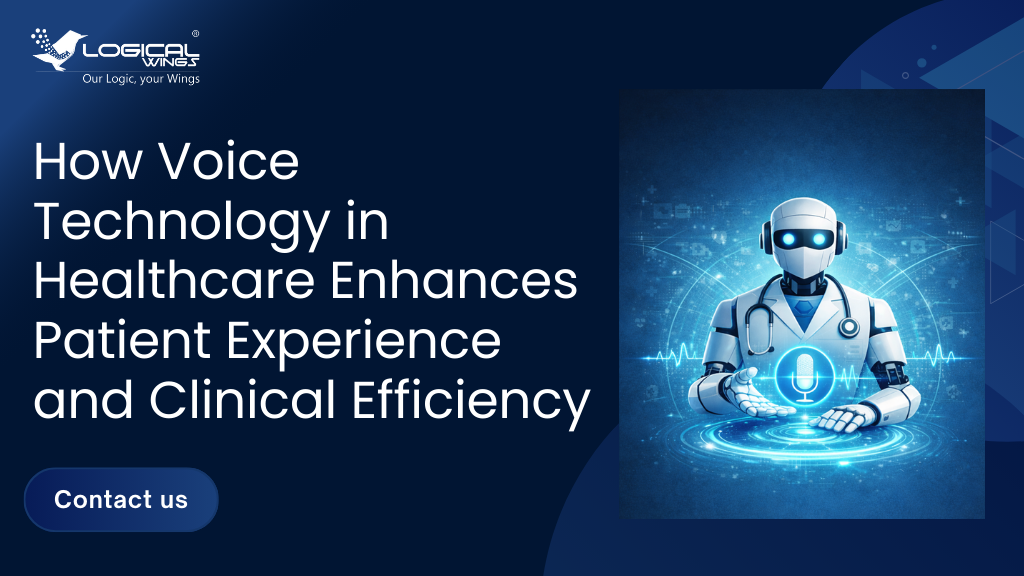
How Voice Technology in Healthcare Enhances Patient Experience and Clinical Efficiency

How Voice Technology in Healthcare Enhances Patient Experience and Clinical Efficiency

The healthcare industry is undergoing rapid digital transformation. From telemedicine to AI-driven diagnostics, innovation continues to reshape how care is delivered. Among these advancements, voice technology is emerging as a powerful tool that enhances patient engagement while significantly improving clinical workflows. As healthcare organizations invest in custom healthcare solutions, integrating voice-enabled systems into digital platforms is becoming a strategic priority. Combined with healthcare mobile app development, voice technology is redefining patient interaction, documentation efficiency, and operational productivity. What Is Voice Technology in Healthcare? Voice technology in healthcare refers to AI-powered systems that enable voice recognition, speech-to-text transcription, and conversational interfaces within clinical and patient-facing applications. These systems allow users to interact with healthcare platforms using natural speech rather than manual input. In modern healthcare mobile app development, voice technology can be integrated into: By embedding voice interfaces into digital systems, healthcare providers can deliver faster, more intuitive, and accessible care experiences. Enhancing Patient Experience Through Voice Technology 1. Simplified Appointment Scheduling Voice-enabled apps allow patients to schedule, reschedule, or cancel appointments using simple spoken commands. This reduces friction and improves access to care, particularly for elderly or less tech-savvy users. 2. Medication Reminders and Chronic Care Support Voice-powered healthcare applications can: This improves adherence rates and empowers patients to take an active role in their health management. 3. Improved Accessibility Voice technology plays a critical role in making healthcare inclusive. Patients with visual impairments, mobility challenges, or limited literacy can interact with applications hands-free. Multilingual voice assistants also bridge communication gaps in diverse patient populations. 4. Enhanced Telehealth Experiences In telemedicine platforms, voice-enabled features streamline patient intake, symptom reporting, and follow-up instructions, creating a smoother virtual care journey. When implemented as part of custom healthcare solutions, voice capabilities significantly elevate the overall patient experience. Improving Clinical Efficiency and Workflow While patient experience is vital, voice technology’s impact on clinical efficiency is equally transformative. 1. Automated Clinical Documentation Physicians spend a considerable portion of their day on documentation. Voice-enabled speech-to-text systems allow providers to dictate notes directly into EHR systems in real time. This: 2. Reduced Physician Burnout Administrative overload is a leading cause of clinician burnout. By automating repetitive documentation tasks, voice technology allows providers to focus more on patient care rather than manual data entry. 3. Faster Data Retrieval Clinicians can use voice commands to retrieve patient records, lab results, or imaging reports instantly. This accelerates decision-making and improves workflow efficiency during consultations. 4. Streamlined Clinical Communication Voice-powered internal systems can assist with task reminders, shift updates, and care coordination, improving team collaboration across departments. When developed by an experienced healthcare app development company, these voice-enabled systems integrate seamlessly into existing healthcare infrastructure. The Role of a Healthcare App Development Company Successfully implementing voice technology in healthcare requires deep industry expertise. A specialized healthcare app development company ensures: Healthcare organizations need tailored, secure, and regulation-compliant systems. Off-the-shelf solutions often fail to meet complex clinical requirements. This is where custom healthcare solutions become critical. A strategic technology partner can design voice-enabled healthcare applications that align with specific operational workflows and patient engagement goals. Voice Technology in Healthcare Mobile App Development Modern healthcare mobile app development is no longer limited to appointment booking or video consultations. Voice-enabled mobile applications now support: For example, a patient managing diabetes can verbally log glucose levels, receive instant feedback, and share data with their physician — all through a voice-powered interface. Integrating voice functionality into mobile health apps improves usability while increasing patient adoption rates. It also supports scalable digital health ecosystems that grow alongside organizational needs. Security, Compliance, and Integration Considerations Despite its advantages, implementing voice technology in healthcare requires careful planning. 1. Data Privacy and Security Healthcare data is highly sensitive. Voice recordings and transcripts must be encrypted and stored securely to maintain HIPAA compliance. 2. Accuracy and Reliability Clinical environments demand high recognition accuracy. Advanced AI models must be trained to understand medical terminology, accents, and contextual nuances. 3. System Integration Voice systems must integrate seamlessly with existing EHRs, hospital management systems, and patient portals without disrupting workflows. Partnering with a trusted healthcare app development company ensures these challenges are addressed through robust architecture and compliance-driven development. The Future of Voice Technology in Healthcare The future of voice technology in healthcare is promising. Advancements in AI and machine learning are making voice systems more intelligent and context-aware. Emerging trends include: As digital health continues to evolve, voice-enabled platforms will become a standard feature of custom healthcare solutions. Healthcare organizations that invest in advanced healthcare mobile app development today position themselves for long-term innovation, operational efficiency, and improved patient outcomes. Conclusion Voice technology is transforming the healthcare industry by bridging the gap between patient engagement and clinical efficiency. From automating documentation to enhancing accessibility and telehealth experiences, voice-enabled systems are redefining modern care delivery. By collaborating with an experienced healthcare app development company, healthcare providers can implement secure, scalable, and compliant custom healthcare solutions that integrate advanced voice technology into their digital ecosystem. The future of healthcare is not just digital — it’s conversational, intelligent, and voice-enabled. Let’s Connect us: +1 (518) 284 3573 Address: S.T.E.A.M. Building, 279 Central Avenue, Albany, New York 12206.

How Voice Technology in Healthcare Enhances Patient Experience and Clinical Efficiency Read More »

custom healthcare solutions, healthcare software development company
Scroll to Top